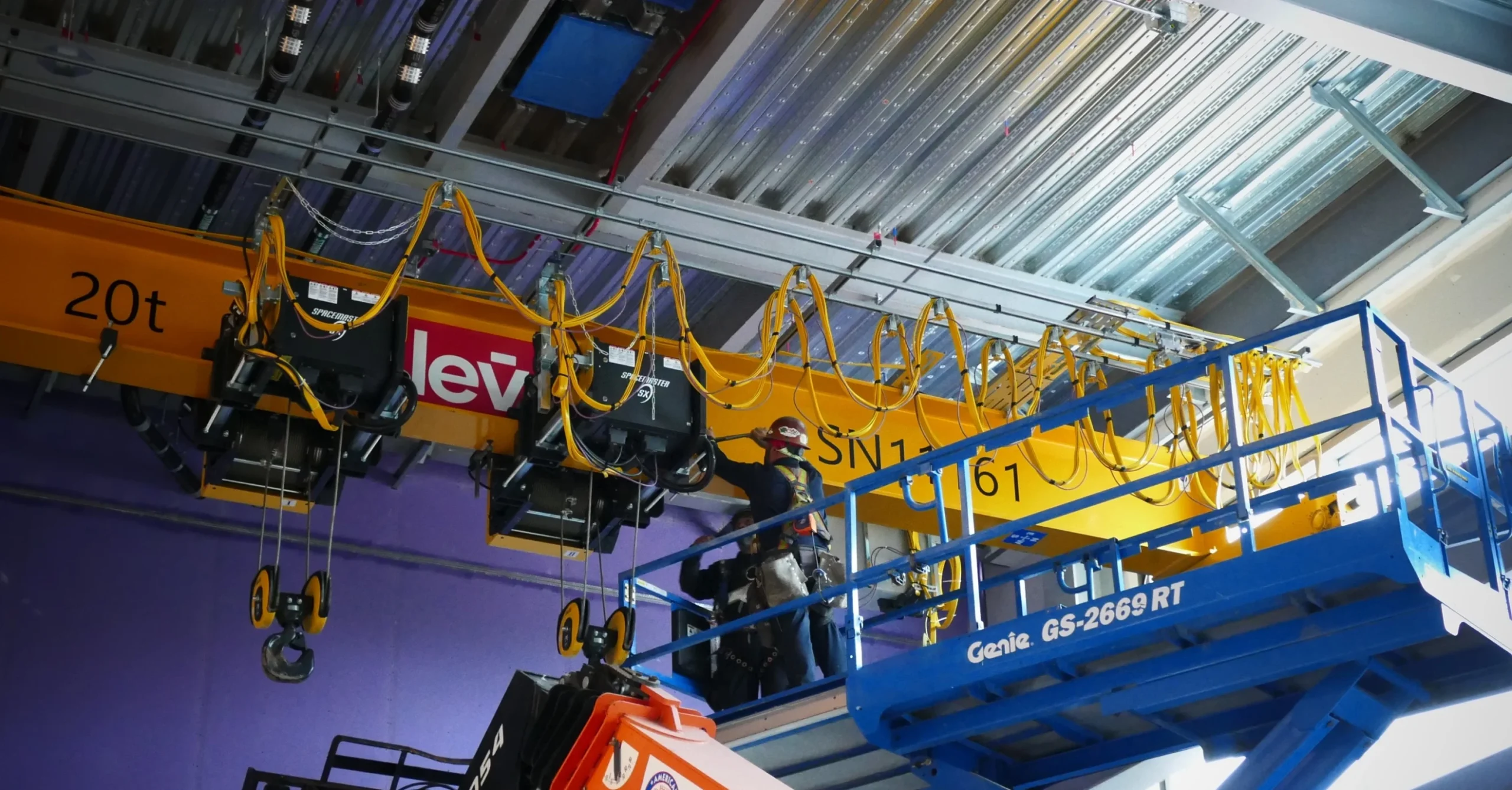



Overhead Bridge Crane Installation Requirements
Comprehensive preparation checklist for freestanding and building-supported bridge crane installations. Ensure your facility is ready for successful crane system installation.
Permits and Approvals

Electrical permits obtained from local authority having jurisdiction
Structural permits approved (if required for modifications or foundations)
Fire marshal approval obtained if required
All permits posted at job site per local code
Final inspection scheduled with local building inspector
Note:
Permit responsibility varies by project and will be specified during planning.
Foundation Requirements
Freestanding Systems When Required
Foundation excavation completed per Level Crane Systems specifications
Underground utilities located and marked (call 811 before excavation)
Concrete poured with precision anchor bolt placement per specifications
Foundation cured per Level Crane Systems specifications
Drainage system installed around foundation perimeter if needed
Foundation dimensions verified with Level Crane Systems
Site grading completed around foundation area
Note:
Not all freestanding cranes require foundations. Level Crane Systems will specify if needed and who is responsible for construction.
Electrical Requirements
Customer Responsibility
Electrical service capacity verified adequate for crane specifications
Licensed electrician contracted for rough-in and final connections
Conduit runs completed from power source to crane runway connection point
Junction box installed at location specified by Level
Crane Systems
Disconnect switch installed per NEC requirements and crane specifications
Electrical rough-in inspected and approved before installation
Electrical Specifications
Provided by Level Crane Systems
Voltage: typically 208V, 230V, 460V, or 575V
three-phase
Phase: single-phase or
three-phase
Amperage: based on crane motor specifications
Control voltage: if different from main power
Site Preparation and Access
Customer Responsibility
Delivery and Installation Access
Delivery route confirmed accessible (loading dock, doorways, pathways)
Clear path maintained for moving crane components to installation location
Overhead obstructions removed or relocated (lights, HVAC, piping, conduit)
Outdoor site access confirmed for freestanding crane delivery (gate width, paved access)
Heavy equipment access verified (mobile crane or boom truck access)
Property access permissions obtained if equipment crosses adjacent properties
Installation Work Area
Installation area cleared of equipment, materials, inventory, and obstacles
Adequate workspace provided (minimum 10-foot clearance around work area)
Adequate lighting installed for safe installation work
Material staging area designated and cleared
Temporary power (110V minimum) accessible within 100 feet
Water source available if
needed
Weather protection arranged for outdoor installations (tents, tarps)
Ground conditions verified stable for heavy equipment
Floor surfaces cleaned and free of debris, oil, or tripping hazards
Loading dock or receiving area available and clear
Safety and Coordination
Customer Responsibility
Site Safety
Safety barricades available to restrict personnel access during installation
First aid kit accessible at installation site
Emergency contact information posted and visible
Fire extinguishers accessible in installation area
Facility safety rules communicated to Level Crane Systems before installation
Site-specific hazards identified and communicated
Scheduling and Coordination
Installation schedule coordinated with facility operations
Point of contact designated and available throughout installation
Facility personnel notified of schedule and work area restrictions
Production schedule adjusted if necessary during installation
Parking arranged for installation crew and vehicles
Security access badges
arranged if required
Facility rules and protocols communicated to Level Crane Systems
Operations in installation area suspended or relocated
Restroom and break facilities access provided
Site contact available by phone throughout installation
Post-Installation
Customer Responsibility
Crane operators available for training session
Maintenance personnel identified for inspection training
Inspection records system established for OSHA compliance
Preventive maintenance program initiated per recommendations
Warranty documentation filed with equipment records
Maintenance log created for tracking inspections and service
Operating manuals stored in accessible location
Level Crane Systems Provides
Complete crane system design and engineering
Structural engineering for runway beams and supports
Foundation design and specifications (when required)
All crane components: beams, bridge, hoist, trolley, electrification
Installation crew supervision and skilled labor
All installation equipment: cranes, lifts, rigging, tools
Technical drawings and specifications
Load testing and commissioning per ASME B30.2 and B30.17
Operator training materials and instruction
Warranty documentation and ongoing support
ASME B30 compliance testing and certification
Installation project management
Permits and foundation construction (on certain projects)
Typical Customer Responsibilities
Permits:
Obtain building, electrical, and structural permits (when specified)
Foundations:
Hire contractor for excavation and concrete work per specifications (when specified)
Electrical:
Licensed electrician for rough-in and final connections
Site Preparation:
Clear and prepare installation area with access and lighting
Access:
Ensure delivery routes and heavy equipment access
Coordination:
Designate contact, schedule with operations, provide site access
Safety:
Communicate facility requirements and site hazards
Post-Installation:
Electrician connections, operator training, maintenance program
Note:
Responsibilities vary by project scope and will be clearly defined during planning.
Installation Timeline
Building-Supported Bridge Crane:
Permitting: 2-4 weeks (if customer responsibility)
Electrical rough-in: 1-2 weeks
Site preparation: 1 week before installation
Crane design and fabrication: 6-12 weeks
Freestanding System With Foundations:
Permitting: 3-6 weeks (if customer responsibility)
Foundation construction and cure: per specifications (if customer responsibility)
Electrical rough-in: 1-2 weeks
Site preparation: 1 week before installation
Crane design and fabrication: 8-14 weeks
Freestanding System Without Foundations:
Permitting: 2-4 weeks (if customer responsibility)
Electrical rough-in: 1-2 weeks
Site preparation: 1 week before installation
Crane design and fabrication: 8-14 weeks
Level Crane Systems Installation:
Component delivery and staging
Structural installation and assembly
Crane electrical connections and testing
Load testing and commissioning
Operator training
Note:
Timelines vary by project scope. Following represents typical customer preparation timelines.
Installation duration varies based on crane size, configuration, and site conditions. Level Crane Systems provides specific timelines during project planning.
Engineered for excellence
Important Project Information

Flexible Project Scopes
Level Crane Systems offers flexible project scopes. Depending on your needs, Level Crane Systems may handle permits and foundation construction, or these may be customer responsibilities. Your representative clearly defines all responsibilities during project planning and contracting.

Foundation Work
Not all freestanding crane systems require foundations. When needed, Level Crane Systems provides complete engineering drawings and specifications. Foundations may be constructed by Level Crane Systems or by customer-contracted qualified concrete contractor following specifications, including precise anchor bolt placement.

Electrical Work
Level Crane Systems provides detailed electrical specifications and connection point locations. Customer hires licensed electrician to install electrical rough-in (conduit, junction box, disconnect) and complete final connections after crane installation.
Building Modifications
Level Crane Systems provides structural engineering for runway beam support. If building modifications are required, customer hires qualified contractors to complete modifications before installation.
Contact Level Crane Systems
Questions about overhead bridge crane installation requirements? Our specialists are ready to help:

Pre-installation site visits and facility assessments
Engineering support for contractor coordination
Installation planning to minimize facility downtime
Permit assistance and guidance
Timeline planning with facility operations
Specification reviews for contractors
Custom solutions for unique requirements
Proper preparation ensures smooth overhead crane installation and decades of reliable material handling performance.