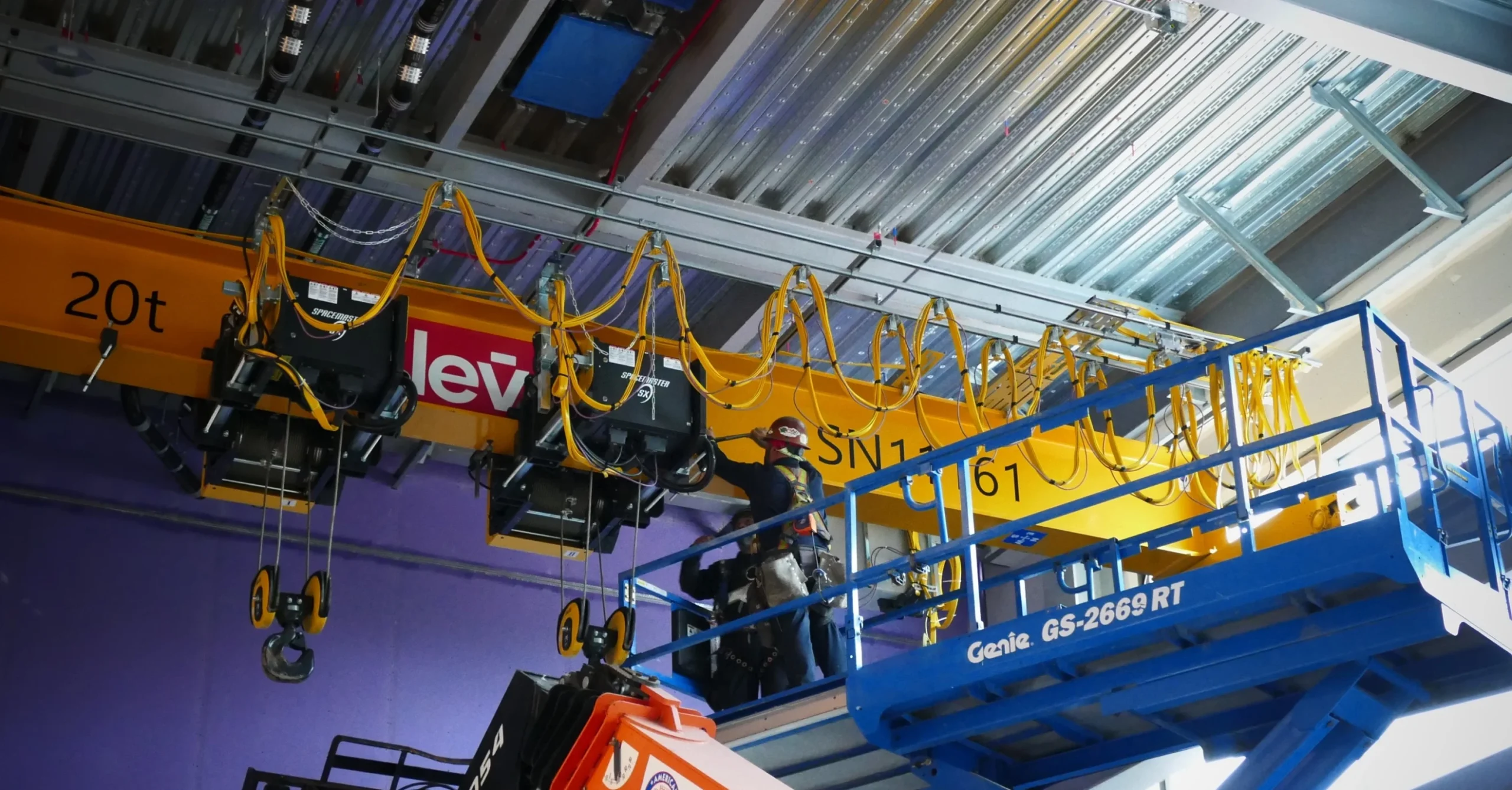



Bridge Crane vs Gantry Crane: Which Is Right for You?
Understanding the key differences between bridge cranes (overhead cranes) and gantry cranes will help you choose the most efficient and cost-effective material handling solution for your facility. This comprehensive guide compares lifting capacity, installation costs, floor space requirements, and ideal applications.
Bridge Crane (Overhead Crane)
Key Advantages of Bridge Cranes

Maximum floor space efficiency:
Runs on elevated runway beams, leaving ground level completely clear for operations
No ground-level obstructions:
Ensures smooth material flow and unimpeded workflow throughout facility
Superior lifting capacity:
Available in capacities from 1 ton to 500+ tons for heavy industrial applications
Permanent installation benefits:
Engineered for long-term, high-frequency lifting operations
Operational efficiency:
Faster cycle times and better productivity for repetitive lifting tasks
Extended span capabilities:
Can cover arger distances between support columns
Professional appearance:
Clean overhead installation improves facility aesthetics
Bridge Crane Considerations
Structural requirements:
Requires adequate building support or engineered column system
Higher upfront investment:
Installation costs include structural modifications and engineering
Building load capacity:
Facility must be rated to handle crane dead load and lifting loads
Permanent installation:
Relocation requires significant time and expense
Facility modifications:
May necessitate building reinforcement or runway beam installation
Extended span capabilities:
Can cover arger distances between support columns
Optimal Bridge Crane Applications
Manufacturing facilities:
Production lines, assembly operations, machining centers
Heavy industry:
Steel mills, foundries, automotive manufacturing
Warehouse operations:
Distribution centers with permanent material handling needs
High-capacity lifting:
Applications requiring lifts above 20 tons
Gantry Crane
Key Advantages of Gantry Cranes
Self-supporting design:
No building modifications or structural reinforcement required
Lower initial investment:
Reduced installation costs compared to overhead systems
Maximum portability:
Can be relocated or repositioned as operational needs change
Indoor and outdoor use:
Versatile operation in areas without roof structure
Building-independent:
Perfect for facilities with inadequate overhead support capacity
Rapid deployment:
Quick installation process with minimal downtime
Flexible positioning:
Easy to move throughout workspace as needed
Gantry Crane Considerations
Floor space requirements:
Support legs occupy valuable ground-level work area
Traffic flow obstacles:
Legs can interfere with material movement and equipment access
Capacity limitations:
Typically limited to lower weight capacities than bridge cranes
Reduced span options:
Shorter maximum span distances in standard configurations
Height restrictions:
May have lower hook height compared to overhead crane systems
Optimal Gantry Crane Applications
Outdoor operations:
Shipping yards, loading docks, outdoor storage areas
Structural limitations:
Buildings without adequate overhead support capacity
Mobile operations:
Job sites requiring crane relocation or temporary lifting
Maintenance facilities:
Construction, repair, and equipment servicing locations
Crane Selection Decision Guide:
Choosing Between Bridge and Gantry Systems
Choose a Bridge Crane (Overhead Crane) When:

Adequate building structure:
Your facility has sufficient structural support or can accommodate runway beams
Floor space is critical:
You need maximum ground-level area for operations and material flow
High capacity needs:
Lifting requirements exceed 20-30 tons regularly
Permanent operations:
The crane will serve as a long-term fixed installation
High utilization:
Frequent, repetitive lifting operations throughout the day
Workflow optimization:
Maximizing operational efficiency is a top priority
Large coverage area:
Need to span 50+ feet between support points
Choose a Gantry Crane When:
Limited building structure:
Facility lacks adequate overhead support or roof capacity
Outdoor requirements:
Need lifting capability in uncovered or open-air areas
Portability required:
Must relocate or reposition crane as projects change
Budget constraints:
Lower upfront investment is essential for project approval
Fast implementation:
Quick installation and minimal downtime are priorities
Temporary applications:
Short-term projects or changing operational needs
Lower capacity loads:
Typical lifts under 20 tons
FAQs: Bridge Crane vs Gantry
Crane
What is the main difference between a bridge crane and a gantry crane?
Bridge cranes run on elevated runway beams attached to building structures, maximizing floor space, while gantry cranes are self-supporting with legs that run on ground-level rails or surfaces. Bridge cranes require adequate building structure but offer greater capacity and efficiency, whereas gantry cranes are more
portable and don’t require building modifications.
Which is more expensive, a bridge crane or gantry crane?
Bridge cranes typically have higher initial installation costs due to structural requirements and building modifications, often ranging from $50,000 to $500,000+ depending on capacity and span. Gantry cranes generally have lower upfront costs since they’re self-supporting and don’t require building modifications.
However, total cost of ownership depends on capacity, span, duty cycle, and specific application requirements.
What are the weight capacity differences between bridge and gantry cranes?
Bridge cranes can handle higher lifting capacities, typically ranging from 1 ton to 500+ tons for heavy-duty industrial applications. Gantry cranes are generally designed for capacities up to 50 tons in standard configurations, though heavy-duty models can lift more. Bridge cranes are the preferred choice for the
heaviest industrial lifting operations requiring maximum capacity.
Can gantry cranes be used outdoors?
Yes, gantry cranes are ideal for outdoor use and can operate in areas without overhead structure. They’re commonly used in shipping yards, construction sites, outdoor storage areas, and loading docks. Outdoor gantry cranes can be designed to withstand weather conditions including wind, rain, and temperature
variations. Bridge cranes are typically designed for indoor use within buildings, though outdoor overhead crane systems with weather-resistant components are also available.
How long does it take to install
a bridge crane vs a gantry crane?
Gantry crane installation is typically faster, often completed in 1-3 days for standard systems since they’re self-supporting. Bridge crane installation takes longer, usually 1-4 weeks, as it requires runway beam installation, structural modifications, electrical work, and load testing. Complex bridge crane systems with
building modifications may require several months including engineering and construction phases.
Which crane type requires more maintenance?
Both bridge cranes and gantry cranes require regular maintenance including inspections, lubrication, and component checks. Bridge cranes may have lower maintenance needs over time due to less exposure to weather and debris. Outdoor gantry cranes may require more frequent maintenance due to
environmental exposure. Overall maintenance requirements depend more on duty cycle, operating conditions, and component quality than crane type.
Still Not Sure Which Crane System Is Right for Your Facility?
Our experienced crane specialists can assess your facility layout, lifting requirements, budget constraints, and operational goals to recommend the optimal crane solution for your specific
application. Get expert guidance on bridge crane vs gantry crane selection with a complimentary consultation.
Serving industries nationwide with custom crane solutions | Licensed, insured, and OSHA-compliant installations